LOL
LOL CS2
CS2 Dota 2
 Valorant
 Fortnite
 Call of Duty
 Mobile Games
 Gaming
Inside ZOWIE’s Sports Science Playbook: How Esports Players Shape Its Gear

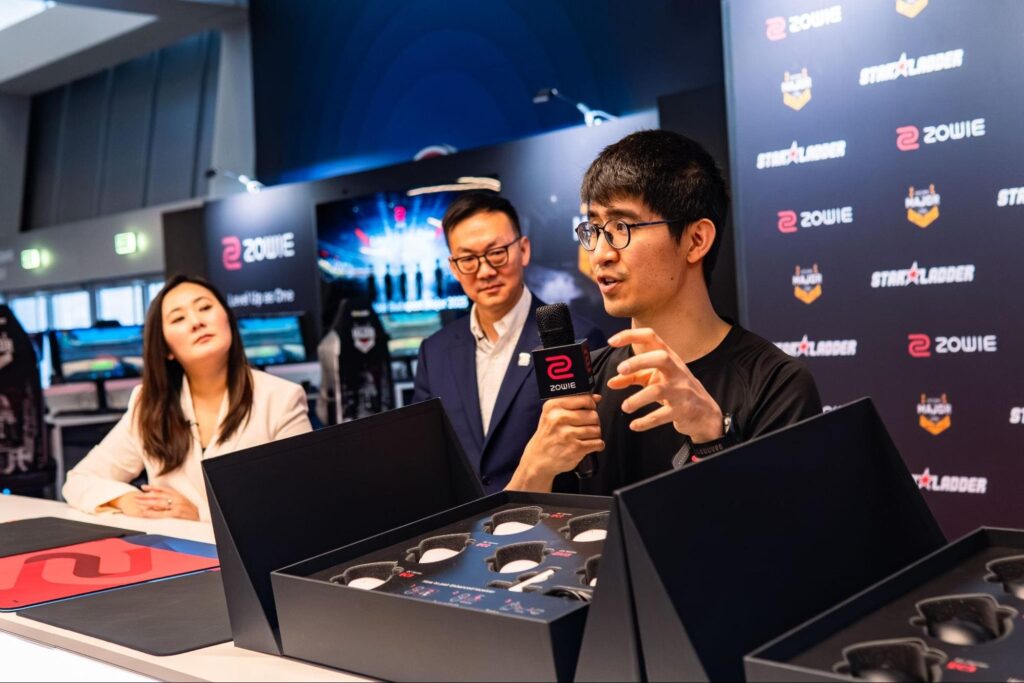
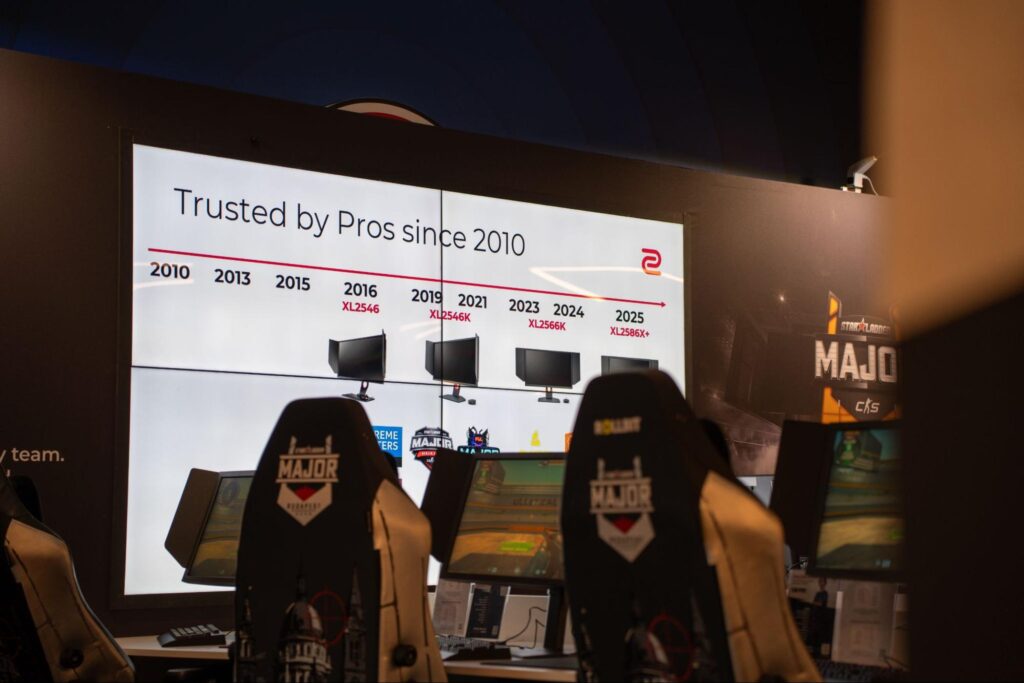
By the time you see a ZOWIE mouse or monitor on a Tier 1 stage like the StarLadder Budapest Major 2025, it’s clear the brand has already made a deliberate choice about where it wants to be seen, who it wants to be accountable to, and what “performance-driven” means in practice.
I recently sat down with ZOWIE representatives at the ZOWIE Media Tour in Budapest to gain a deeper understanding of the company’s broader strategy. In particular, I wanted to investigate how it works with professional players, how its Sports Science Lab translates data into product decisions, and how it communicates those gains without hiding behind engineering jargon.
The gist of the conversation was simple: ZOWIE is trying to treat esports like a traditional sport. The more interesting part, made clear throughout the interview, is how the company puts that idea into practice through structured player testing.
From “Performance-Driven” Claims To Player-by-Player Proof
Most gaming brands claim to be performance-led. However, ZOWIE’s response to that crowded messaging is to move the conversation away from broad claims and toward individual, player-by-player evidence.
In our discussion, the emphasis kept returning to the same core message: meaningful feedback isn’t a single generalized insight from “the community.” It’s collected from real players, interrogated, compared, and then mapped to measurable outcomes.
ZOWIE’s representatives described their approach as something closer to sport performance support than conventional product marketing. They view their work as “pioneering” in the sense that it is built around a facility fully dedicated to esports, rather than esports being a side project within a broader consumer tech pipeline.
The point wasn’t that other groups don’t conduct research, as many universities and esports associations clearly do. It instead centers on the fact that ZOWIE is investing in an end-to-end environment where testing, interpretation, and application all exist under one roof. And that “application” piece matters.
ZOWIE was candid that collecting the data is only half of the challenge. The harder part is producing something actionable: a report that helps a player or coach understand when fatigue begins to show up, what that fatigue does to players’ performance, and what might reduce the drop-off.
The way they framed it was also quite revealing. They don’t simply say “here’s a graph,” but “here’s what you do next.” It’s the same logic behind a sports medical check-up.
The Eindhoven Lab And Its Product Design Philosophy
ZOWIE’s European Sports Science Lab in Eindhoven is positioned as the company’s first European facility of its kind, and the third in its global network, following those in Taiwan and China. That location isn’t just a pin on a map, either, but is instead part of the brand narrative.
Eindhoven is presented as a hub where sports science talent and research culture make it easier to build a performance-focused operation with a real methodological backbone.
Rather than existing as a theoretical research space, the facility allows ZOWIE to observe how players actually perform under load, fatigue, and repetition, turning those observations into legitimate insights that can inform product decisions.
Underpinning that approach is a singular design vision. Every product must serve one purpose. That is, to help players win by reducing limitations and supporting consistent performance in the pursuit of perfection.
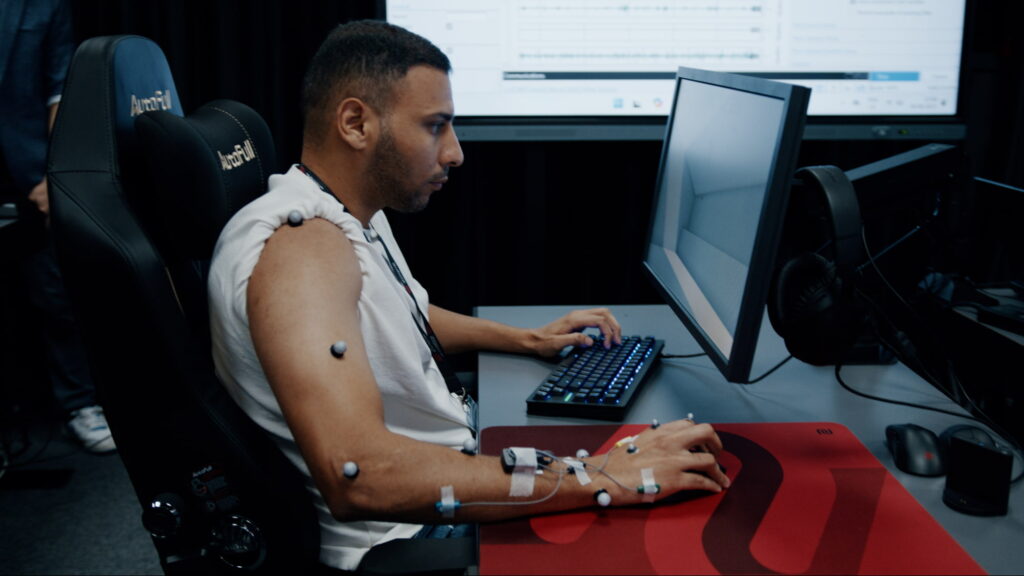
During the interview, one of the most useful analogies they offered was cycling and golf: before high-level competition, athletes don’t just show up and hope their tools match their bodies. Their gear is specially fitted and customized according to their body composition, mechanics, and the demands of the sport.
ZOWIE’s bet is that esports is ready for that same seriousness.
Their lab pitch is basically this: you bring your own mouse, try a battery of tasks, and run A/B testing under structured conditions to produce real objective numbers. ZOWIE can then take that information and carry it forward in their product design.
That exact same framing is also ZOWIE’s answer to the suspicion that performance talk regarding gaming peripherals by their competitors is often just subjective storytelling.
Turning Gameplay Into Repeatable Science
One of the most important concerns with any lab-based testing is ecological validity—basically, “do the findings actually translate to real competition, or are you just measuring a lab artifact?”
Designing Tests That Mirror Real Games
ZOWIE’s explanation leaned heavily on how it designs the testing itself.
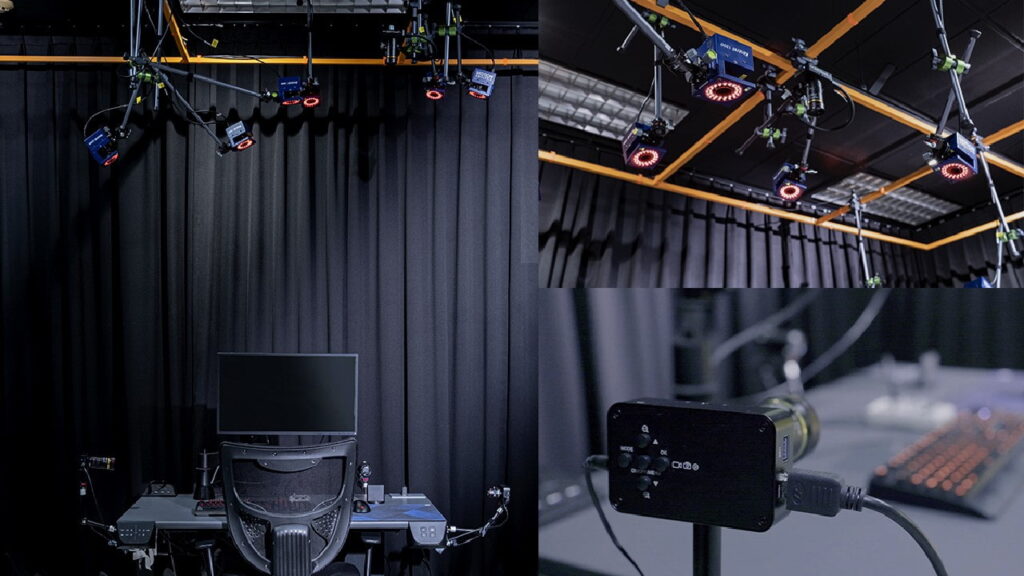
Instead of telling players to “play normally” and hoping the data is interpretable, ZOWIE says it uses proprietary, in-game task designs that translate real gameplay into structured and repeatable scenarios.
These tasks are designed to simulate how aim control, tracking, flicking, and movement are executed in-game, while maintaining consistency to facilitate comparison across different kinds of players and gaming sessions.
Adapting The Lab To The Player
They were also explicit about adapting the lab to the player, not the other way around.
The intent here is to avoid forcing athletes into an unfamiliar protocol that changes their behavior and contaminates the outcome. This is achieved by testing with the player’s own settings and routines, including their in-game sensitivity, grip style, crosshair settings, posture, warm-up habits, and overall preparation flow.
Reducing Noise Through Multi-Session Testing
Another key point was repeatability over time.
ZOWIE described multi-session testing as a way to reduce short-term variance and identify stable patterns across load, fatigue, and repetition. And to further reduce “clinical” behavior changes, they aim for a lab environment that resembles esports tournament and training conditions as closely as possible.
No Cherry-Picking
ZOWIE also emphasized that avoiding cherry-picked results is a core part of its methodology.
While professional players are essential for defining performance ceilings, the lab does not rely solely on elite data. Testing instead spans a range of competitive levels, from aspiring and semi-pro players to established pros, allowing patterns to be validated across broader player populations rather than isolated high-level performances.
In practice, pro-level data is treated as an ideal end-state, not a statistical shortcut.
Turning Raw Data Into Actionable Insights
Finally, they stressed interpretation.
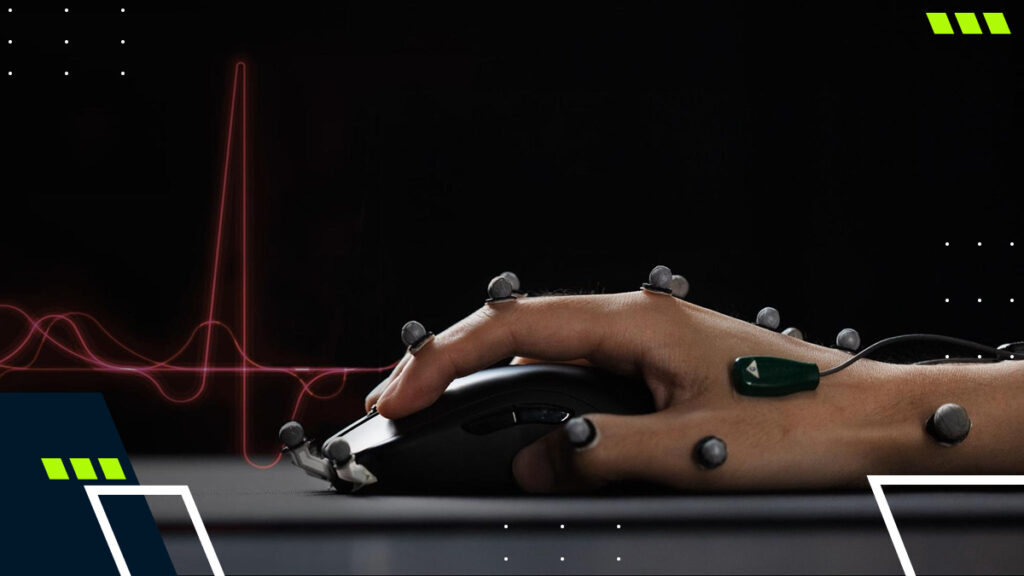
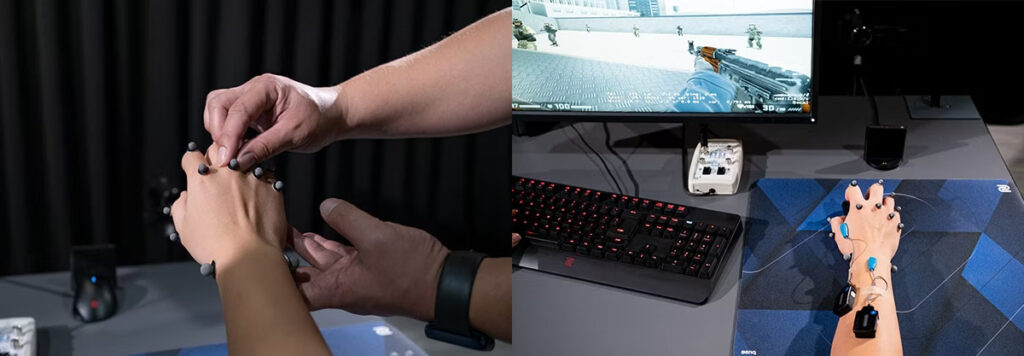
Quantitative measurements don’t stand alone. They’re reviewed together with the player, contextualized by recent matches and training experiences. This qualitative layer is a critical part of the process, giving real-world meaning to EMG and motion-capture data—tools that are well established in sports science.
ZOWIE’s value lies in applying both qualitative and quantitative approaches in an esports context and integrating them with years of collaboration directly with professional players, including legendary Counter-Strike players like Emil “HeatoN” Christensen.
What ZOWIE Actually Measures: Fatigue, Consistency, and Precision Under Load
The most consistent theme across the interview was not “peak performance,” but sustained performance. ZOWIE repeatedly returned to one idea: high-level players don’t just buy raw output—they buy consistency.
That’s why the lab work focuses on what happens before fatigue and after fatigue, as well as how performance changes between these states. ZOWIE described building indices around accuracy, precision, and efficiency. They ask, can a player keep their precision after a long session, and what helps stabilize that outcome?
This is where their sports science narrative becomes tangible.
From Comfort To Measurable Performance
Instead of discussing abstract “comfort,” they focus on observed performance degradation and its correlation with muscle activity and movement patterns. The lab setup aims to identify weak points, like moments or mechanics where strain accumulates, and then translate that into practical design ideas.
Importantly, ZOWIE also acknowledged that even pros can struggle to articulate why something feels good. That’s a reality check for anyone who assumes pro feedback is automatically precise and diagnostic.
For example, pros can tell you something works, but translating that into a product narrative that doesn’t sound like marketing is the harder part. ZOWIE’s solution is to anchor messaging in experience and outcomes.
That is, if you feel you aim better and shoot more precisely, the goal is reached—even if the deep technical story stays behind the curtain.

Designing The U2: Using Sports Science For Product Development
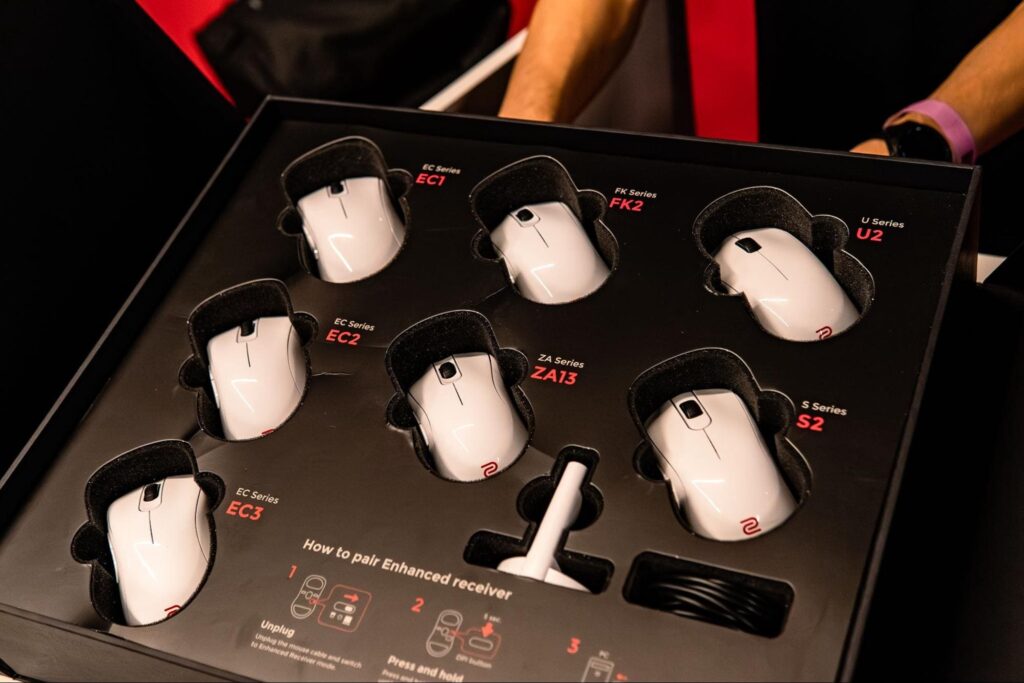
The story behind ZOWIE’s U2 wireless mouse design is a clear example of how the company is attempting to turn sports science into design intent rather than post-hoc justification (i.e., coming up with reasons after the fact to explain or defend a decision that was already made).
The premise begins with a simple observation. In short, different FPS esports games involve different movement patterns, which can create different demands on the hand over time. If the movement patterns change, the “right” mouse shape may change as well.
For the U2 product design, ZOWIE describes using EMG and motion capture to analyze human muscle activity and joint motion to develop a new shape intended to help players maintain a higher level of performance throughout a session.
The focus is “enduring performance” and “agility” as opposed to initial comfort.
Thumb Angle
One specific design narrative centers on thumb angle.
ZOWIE’s story suggests that when the thumb angle is larger, muscle firing frequency tends to decrease over time, which they interpret as a sign of fatigue. The U2’s left-side curve is positioned as a way to support a smaller thumb angle during grip, helping keep muscle firing rate stable without obvious signs of fatigue.
Force Distribution
Another narrative involves ring finger angle and force distribution.
The claim is that when the ring finger angle is larger, force disparity between the two sides of the hand increases, making one side more likely to bear an uneven load. The U2’s right-side curve is presented as encouraging a more moderate ring finger angle, helping balance force across the hand.
Agility Angle
Then comes the agility angle—an especially important point for games like Fortnite and Apex Legends, where side-button clicking may be more frequent.
ZOWIE describes designing the U2’s side buttons by adjusting their position and shape to make access easier for the thumb. In a similar vein, thumb angle is said to influence index finger click speed, with the U2’s left-side curve and mouse-back design supporting a smaller thumb angle that facilitates faster index finger clicking.
Now, whether or not you treat this as a fully validated scientific conclusion or a product narrative informed by lab trends, the take-home message is this: ZOWIE is at least trying to connect specific ergonomic choices to specific performance outcomes, and then tie those outcomes back to real in-game behaviors rather than generic “better feel.”
Partnership Strategy: Why CS2 Still Sits In The Head Of The Table
ZOWIE’s partnerships are not random, either.
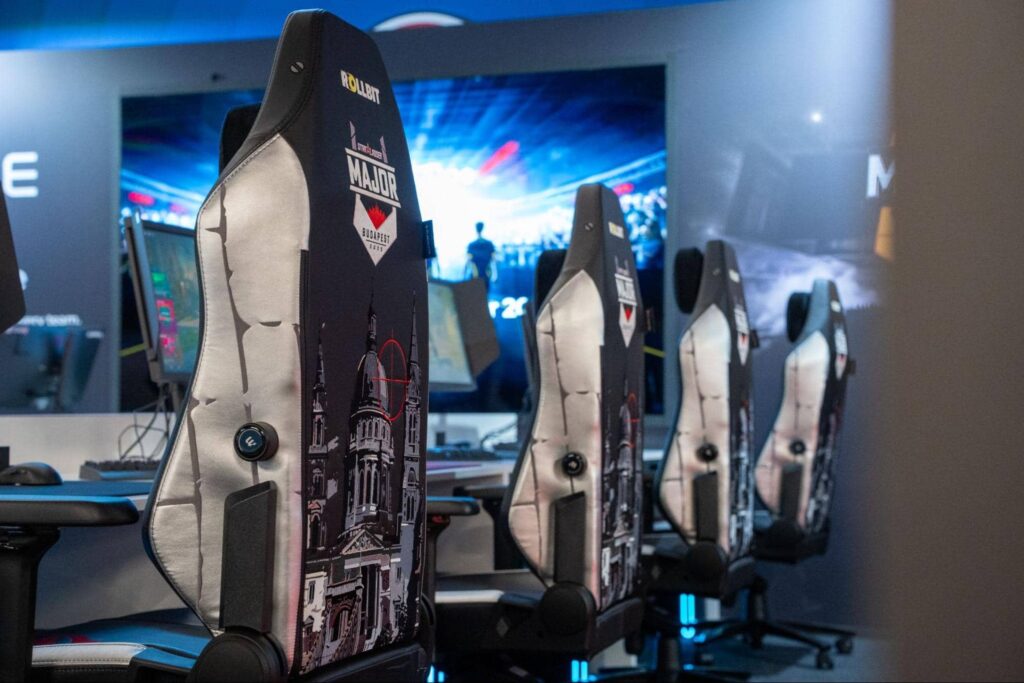
In our conversation, the company framed Counter-Strike 2 not only as the most-watched but also the most competitive FPS ecosystem, with an audience that cares deeply about winning and losing. That competitive identity is central to why ZOWIE continues to “choose Counter-Strike heavily” and invest long-term in that scene.
But ZOWIE also made it clear it can’t ignore other FPS titles, especially VALORANT and Fortnite, because they represent different audiences and different future markets.
One representative described attending VALORANT Champions Paris and noticing a sharp demographic shift: younger fans and a visibly higher proportion of women in the crowd compared to CS events. The conclusion wasn’t that CS is “old,” but that the FPS landscape is segmented by age, culture, and behaviors.

That segmentation seems to influence the company’s partnership strategy.
That said, ZOWIE’s goal is still to align with top-tier competition, but it also seeks ways to maintain its presence when official sponsorship slots are limited. They cited supporting VALORANT Challengers circuits in regions like DACH (Germany, Austria, and Switzerland) and France as one way to stay connected to the semi-pro and “pro-wannabe” pipeline.
At the same time, ZOWIE places real value on smaller LANs and controlled experience events, sometimes capped at 30–40 attendees, because of a practical problem: the e-commerce boom means many buyers never actually touch a product before purchasing it.
Smaller, more comfortable environments let players try gear as they would in a gaming café, ask questions directly, and build trust through experience rather than marketing copy. In other words, the partnerships aren’t only about logos on stream. They’re also about building physical touchpoints where “feel” can be tested, not just promised.
The Bigger Picture: A Complete Feedback Loop
One of the most interesting parts of the conversation was the “where could this lead?” question.
I asked if ZOWIE imagines a future where hardware becomes part of a full feedback loop (something closer to wearables in traditional sport), where a player could use a mouse and receive insights like “your performance drops here,” or “fatigue is showing up now.”
ZOWIE’s answer was cautious: not at the moment, not in the way people imagine with chips and real-time sensor feedback. But they also acknowledged the idea was compelling, and, tellingly, described it as a “very good idea.”
However, their follow-up suggested they would approach the problem differently from typical wearables. At a broader level, they argued that esports already has a unique advantage. They noted that gameplay behavior can be captured at scale through demos and video review, in a way that traditional sports struggle to replicate.
By contrast, traditional sports rely on GPS and external tracking systems to reconstruct movement, while esports can directly log and replay in-game decisions, mechanics, and outcomes. That gives esports an enormous data advantage, even if the hardware side still has room to evolve.
For ZOWIE, this creates a clear opportunity. The company is laying a sports-science foundation built around performance indexes and gear recommendations, with the long-term potential to expand into more personalized feedback and training insights, without turning mice into wearable devices.
How far that goes, however, will ultimately be shaped as much by design philosophy as by technical possibility.
Why This Matters: ZOWIE’s Bet On Seriousness
If there’s one thread that ties ZOWIE’s lab work, product storytelling, and partnership strategy together, it’s the idea of seriousness. ZOWIE wants esports to be treated with the same legitimacy as traditional sport—not just culturally, but methodologically.
That means treating esports players as athletes with individual differences, not just consumers with tastes. It means making performance claims that can be interrogated through repeatable tests, not only defended through influencer quotes. It also means showing up at the biggest competitions to prove the gear holds up under pressure, while also building smaller, hands-on experiences so everyday players can understand with their own hands.
For a Media Tour overview, the headline is easy: ZOWIE is investing in sports science and pro collaboration as a brand pillar. At the Budapest Major, the pitch wasn’t that ZOWIE has solved esports performance. It was instead that it’s building a system that keeps the player at the center.
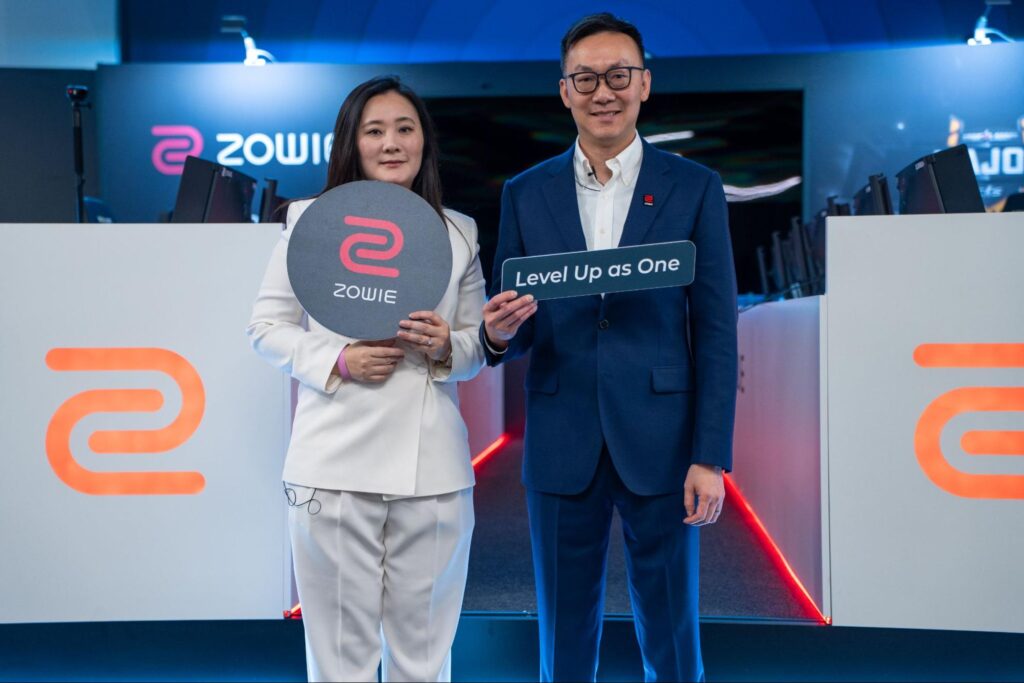
In closing, I want to extend a special thanks to Michael Decker at TARGET Esports Entertainment for the invitation, and to the ZOWIE team—particularly Celsa Wu and Jay Wu—for their time, openness, and insights during the Budapest Major media tour.
Disclaimer: Esports.net attended the ZOWIE Media Tour at the StarLadder Budapest Major 2025 at the invitation of TARGET Esports Entertainment. Travel and accommodation were covered as part of the media tour. Full editorial independence was maintained throughout this coverage.
References
- ZOWIE Unveils First European Sports Science Lab: Advancing Performance with Data Science (ZOWIE)
- Sports Science in ZOWIE Mouse Design (ZOWIE)