LOL
LOL CS2
CS2 Dota 2
 Valorant
 Fortnite
 Call of Duty
 Mobile Games
 Gaming
Riot Games, Valve among companies ordered to pay almost $60m in Brazil over loot boxes


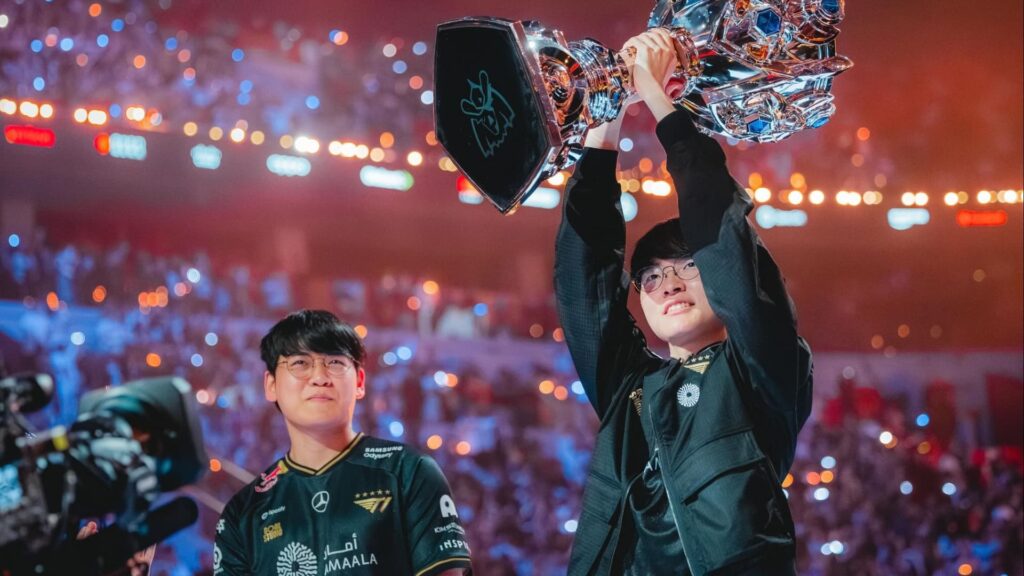
Image source: Riot Games
A judge in Brazil has ordered companies to pay almost $60 million in compensation over the presence of loot boxes on their platforms. Riot Games must pay almost $3 million in damages over its use of the random rewards in League of Legends. Valve, meanwhile, has been hit with a fine of just under $2 million.
Judge Rejane Zenir Jungbluth, of the 1st Court of Childhood and Youth of the Federal District, handed down the order earlier this month. The National Association of Centers for the Defense of Children and Adolescents (Anced) filed a lawsuit against the companies, alleging that their use of loot boxes is severely damaging to young gamers.
According to the ruling, loot boxes resemble gambling and expose children and adolescents to risks of compulsive behavior and commercial exploitation.
Riot has already been forced to restrict minors from playing its games in Brazil, raising the minimum age to 18 years old in March this year. That came as part of the country’s Digital Statute of the Child and Adolescent (ECA), which is meant to protect children and teenagers online.
Ruling Protects Children, Says Lawyer
Márlon Reis, a lawyer at ANCED, celebrated the landmark decision as an important step to safeguarding young Brazilians.
“Children and adolescents cannot be treated as an unlimited source of monetization by business models based on randomness, opacity, and the encouragement of compulsive consumption. The digital environment must also respect the Constitution, the Statute of Children and Adolescents (ECA), and the Consumer Protection Code,” stated the lawyer, in comments to Times Brasil.
The ruling is subject to appeal. If it is upheld, operators will have to make several changes to their games within 90 days. These include adding explicit warnings, disclosing probabilities, an age-verification mechanism, and a refund system. If they fail to comply, they will face further fines of up to R$100,000 (around $20,000) per day.
Users who spent money on loot boxes may also be able to seek personal damages in Brazilian courts.
Details of Companies Fined
In total, game developers have been ordered to pay R$ 298 million ($58.35 million) in damages for collective moral harm. The companies fined include:
| Company | Fine in Brazilian Real (BRL) | Equivalent in US Dollars (USD) |
|---|---|---|
| Apple | R$ 50,000,000 | ~$9.8 million |
| Microsoft | R$ 50,000,000 | ~$9.8 million |
| Tencent | R$ 50,000,000 | ~$9.8 million |
| R$ 40,000,000 | ~$7.8 million | |
| Sony | R$ 40,000,000 | ~$7.8 million |
| Electronic Arts (EA) | R$ 20,000,000 | ~$3.9 million |
| Riot Games | R$ 15,000,000 | ~$2.9 million |
| Garena | R$ 15,000,000 | ~$2.9 million |
| Ubisoft | R$ 10,000,000 | ~$1.96 million |
| Valve | R$ 10,000,000 | ~$1.96 million |
| Konami | R$ 8,000,000 to R$ 12,000,000 | ~$1.57 million to ~$2.35 million USD |
| Nintendo | R$ 5,000,000 | ~$1.0 million USD |
| Total Collective Fine | R$ 298,000,000 | ~$58.7 million USD |
The ruling in Brazil may be used in an increasing number of cases targeting operators in the US.
Valve has borne the brunt of lawsuits, with New York’s Attorney General notably filing a claim against the company earlier this year. Valve filed a motion to dismiss the case last month, arguing that loot boxes are similar to baseball cards and should not be classified as gambling.