LOL
LOL CS2
CS2 Dota 2
 Valorant
 Fortnite
 Call of Duty
 Mobile Games
 Gaming
The four hour stream about League of Legends’ existential crisis
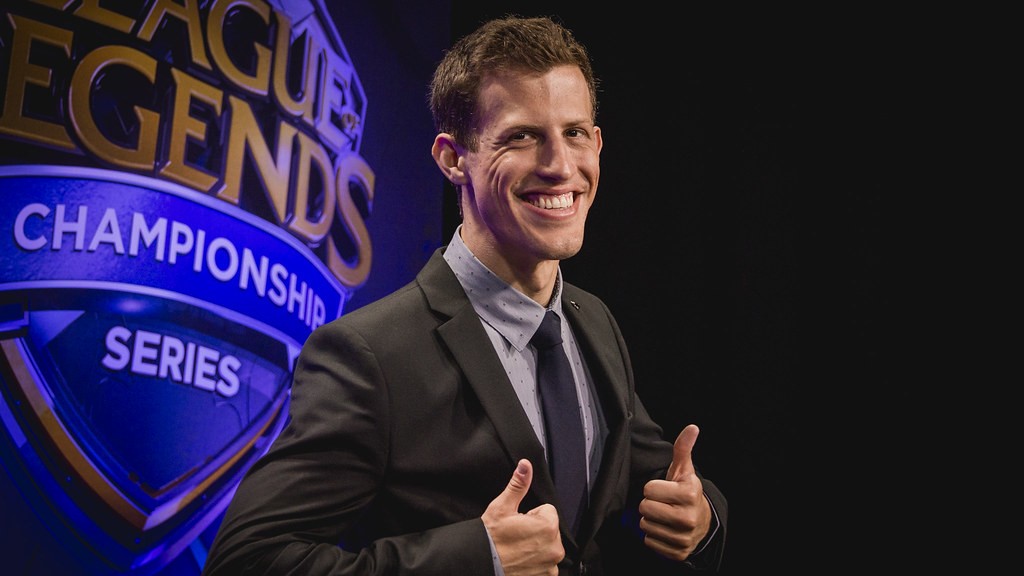
Every once in a while, a Twitch stream transcends a normal gaming broadcast and turns into an unfiltered, four-hour deep dive into the psyche of an industry. That is precisely what happened when veteran commentator and analyst Nick “LS” De Cesare went live to break down why League of Legends esports is currently spiraling into an existential identity crisis.
What started as a theoretical debate about data models quickly escalated into a full retrospective on how money, egos, and panic ruined the professional scene.
“Sorry, babe, I can’t go out tonight. LS just dropped a 4-hour video,” one comment aptly put.
When Game Theory Met European Football
The stream kicked off with a surprisingly deep breakdown of how people misunderstand analytical models in sports. The core argument used a direct comparison to football’s Expected Goals metric.
When analysts talk about wave states, tempo timers, and probability estimates in League, they are not asking a mid laner to do differential equations in the middle of a team fight. The goal is to build reference classes outside the game so that optimal play becomes an internalized instinct rather than mid-fight arithmetic.
Nobody expects a striker to calculate wind velocity before taking a shot, but that does not mean the underlying statistical model is useless.
The 2014 Panic and the Origin of “Hawk” Culture
To explain why professional League of Legends coaching feels so fractured today, the timeline rolled back to late 2014. That was when Riot Games introduced a rule mandating that every professional team had to have a coach on stage for drafts.
Overnight, dozens of empty job positions were created with zero qualification standards. Teams suddenly panicked and started filling these roles with either retired pro players or charismatic managers who simply knew how to talk a big game. There was no formal pedagogy, no training in analytics, and no background in game theory.
To illustrate how this affected the scene, the stream introduced the classic “Hawk vs. Dove” game theory simulation:
- The Doves: Players and coaches who share resources, build long-term infrastructure, and try to elevate the entire ecosystem together.
- The Hawks: Aggressive actors who take short-term profits, sabotage rivals, and hoard power to secure their own immediate job safety.
When venture capital money flooded into esports around 2018, it created a massive pool of resources. But as that money dried up, the scene quickly shifted into a hyper-aggressive, Hawk-dominated ecosystem.
Instead of cooperating to build long-term sustainability, individuals began fighting over shrinking slices of the pie, ultimately harming the league’s broader health.
The Illusion of Brand Power and Non-Experts Hiring Experts
One of the most insightful moments focused on why bad organizational habits persisted for so long. Organizations like classic TSM, Fnatic, and T1 historically enjoyed an unfair advantage. Because they had superstar players like Bjergsen, Doublelift, and Faker, the region’s top talent naturally flocked to them.
Management often mistook this natural draw for superior scouting or coaching genius, LS claimed. In reality, non-expert executives were hiring non-expert staff, lacking the actual discernment to tell whether their internal systems were working.
When those foundational star players eventually left, the underlying lack of structure caused those legendary brands to crumble.
A Post-Apocalyptic Landscape with a Sliver of Hope
The conversation eventually turned to the present day, with LS describing modern esports content as a post-apocalyptic landscape. Highly talented creators and analysts get burned out by constant online hostility, while high-effort documentation videos now get only a fraction of the views they used to.
Yet, despite the gloomy picture of the “esports winter,” there are still signs of life. Grassroots tournaments, co-streaming communities, and new card games like Riftbound are showing that the appetite for high-level gaming remains strong.
The structural issues run deep, but as long as there are people obsessed enough to dig into the math behind the chaos, the heart of competitive gaming is not going anywhere.