What Is Esports? Definition, Meaning & How It Works

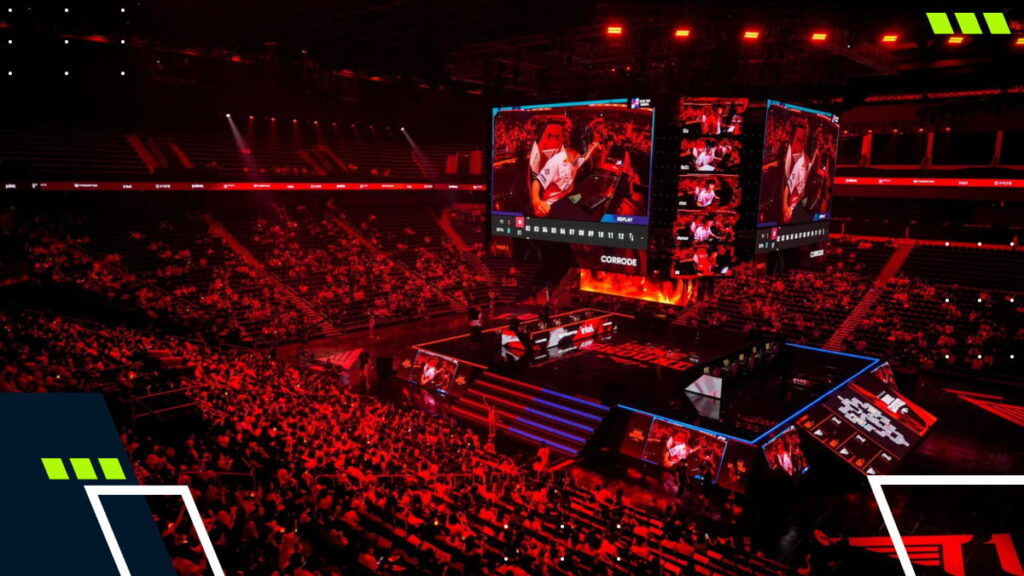
- Esports is defined as organized, competitive video gaming played under defined rules with spectators in mind.
- Unlike casual gaming, esports operates as a professional ecosystem with teams, leagues, salaries, and tournaments.
- Only skill-based, multiplayer games with structured competition and developer support qualify as esports.
Esports has transformed from a niche hobby to a multibillion-dollar industry. As the industry matures, many skilled players are looking to transition from casual play to professional competition. That transition, however, starts with a clear understanding of “what is esports” and how it differs from recreational gaming.
In this comprehensive guide, you will learn what qualifies a game as an esports title and how esports work, including tournament structure, player earnings, and how beginners can get started.
- 1. What Is Esports? Full Definition Explained
- Why Is It Called Esports?
- What Qualifies As Esports? Key Criteria
- 2. Esports vs Gaming – What’s The Difference?
- 3. How Esports Works (Beginner Breakdown)
- Esports Tournament & League Structure
- Types of Esports Games & Major Genres
- 4. Esports Players, Teams & Professional Pathways
- 5. How Do Esports Players Get Paid?
- 6. History of Esports – Origins & Growth
- 7. The Global Esports Landscape in 2025
- 8. How To Get Started With Esports (For Beginners)
- 9. FAQs
- 10. References
What Is Esports? Full Definition Explained
Esports refers to structured competitive video games played with spectators in mind. The Oxford dictionary defines it as “video games played as a competition for people to watch as entertainment,” highlighting both the competitive and spectator-driven nature of the activity.
While debate continues regarding the precise definition of esports, academic researchers offer clearer framing.
Hamri & Sjöblom (2017) call esports “a form of sports where the primary aspects of the sport are facilitated by electronic systems; the input of players and teams as well as the output of the [esports] system are mediated by human-computer interfaces.”
This definition emphasized both the multiplayer setting and the digital medium used.
Unlike casual gaming, esports involves organized competitions where players or teams compete under defined rules using computers, consoles, or mobile devices. Matches reward skill and preparation, are designed to be watched live or online, and are supported by an ecosystem.
Why Is It Called Esports?
The term esports is a portmanteau of “electronic sports,” as the competitions are performed using electronic systems. The “e” in esports refers to the digital medium, while “sports” highlights the professional structure, training, and competitive nature of the activity.
In the late 1990s and early 2000s, as video game tournaments began to grow beyond casual gaming into structured competitions, the terminology emerged as a distinct identifier.
Throughout history, different spelling versions have also been used, including e-sports, eSports, ESPORTS, or esports. In 2017, Associated Press Style Guide standardized the term as esports, which is now used as the umbrella term for competitive video gaming worldwide.

What Qualifies As Esports? Key Criteria
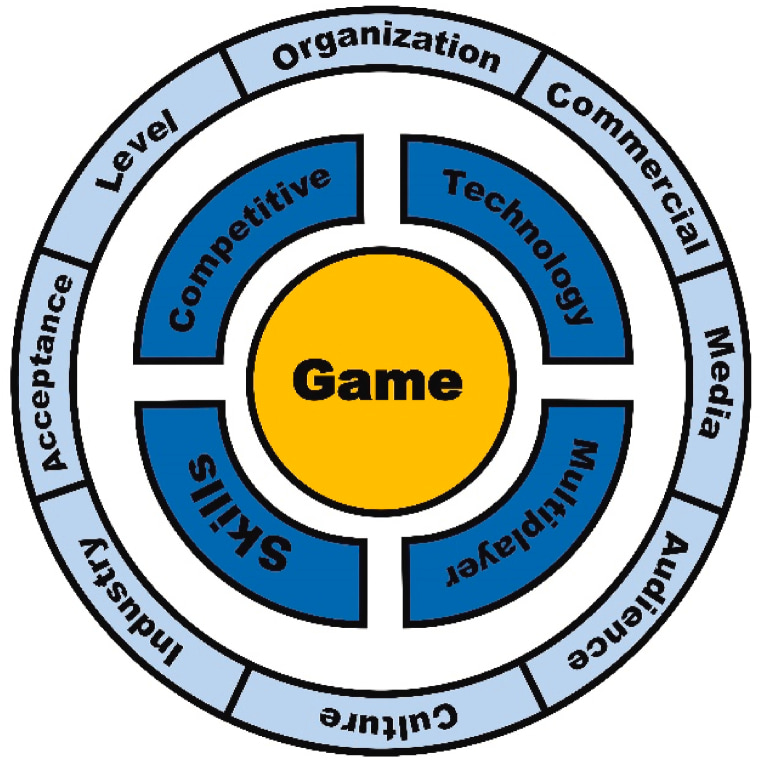
Not every popular electronic game qualifies as esports. To be “esports-ready,” a title must meet clear competitive standards: it must be skill-based, it must be multiplayer, it must have rules, and it must have an audience.
For example, a game like ARC Raiders may rank among the most-played multiplayer games. Still, without structured tournaments and developer support, it remains a recreational rather than an esports game. Likewise, single-person games, casual matches, and story-driven titles without formal competition are not considered esports.
Tang et al. (2023) have summarized key qualifying criteria for a title to be called esports:
- Multiplayer Structure: Esports must involve direct competition between players or teams, either online or at LAN events. The main goal is to outperform the opponent and not just to progress through a story.
- Defined Rules and Goals: Esports take place in structured formats such as leagues, tournaments, or qualifiers. These events have fixed rules and clear win conditions, which ensure fair competition and consistency across matches.
- Skill-based Outcomes: Esports results are primarily determined by players’ skill, including their decision-making, mechanics, and strategic thinking, rather than by randomness or luck. This improves over time with practice and teamwork.
- Spectator and Media: Esports events are designed with spectators in mind. Thus, these events must include viewing tools that make matches easy to follow and engaging for viewers, such as live streaming or broadcasting, in-game observer modes, replays, and professional-style commentary.
- Developer Support: One thing that distinguishes esports from traditional sports is the level of developer support. Since these titles are copyrighted and developed by private companies, the long-term health of the esports scene depends on these developers to maintain, update, and support the games.
Esports vs Gaming – What’s The Difference?
While the terms are used interchangeably, there is a distinction between esports and gaming.
More explicitly, gaming is the act of playing video games for recreation. In contrast, esports is a competitive, organized form of gaming and includes careers, salaries, sponsors, and long-term team contracts.
This table highlights a significant difference between casual gaming performed for entertainment versus professional esports done as a career:
| Feature | Casual Gaming | Professional Esports |
|---|---|---|
| Primary Goal | Entertainment and Relaxation | Structured competition with defined rankings and outcomes |
| Structure | Casual, often unstructured or friend-based | Highly organized with official rulesets, referees, and governing bodies |
| Skill Level | Variable; enjoyment accessible at all levels | Professional; requires advanced reflexes and strategic depth |
| Stakes | Low; played just for personal achievement | High; prize pools, salaries, sponsorships, career income |
| Audience | Usually none | Thousands to millions of viewers |

How Esports Works (Beginner Breakdown)
Esports operates similarly to traditional sports, with a professional ecosystem that includes organizers, game developers, sponsors, teams, and fans. Professional organizations sign players, pay salaries, facilitate training, and hire coaches to guide performance and strategy.
Teams compete in regional matches, seasonal leagues, or standalone tournaments to earn prize money, rankings, or qualification points. These events either take place online or at live venues and are broadcast on major streaming platforms such as Twitch or YouTube.
Beyond the competition itself, esports also includes commentators, analysts, and a production team who broadcast with high production quality and are a crucial part of the competitive scene.
Esports Tournament & League Structure
Major esports tournaments adopt a layered system to bring grassroots talents into the elite-level competitions.
Most journeys begin with Open Qualifier events (like the now-deprecated Dota Pro Circuit Open Qualifiers), where amateur teams compete for a spot in regional leagues. From there, only the best-performing squad would advance to the international Majors.
Unlike “leagues,” which operate over months-long seasons, “tournaments” are high-intensity and short-term events. These often follow different format styles such as single-elimination, double-elimination, round-robin, and Swiss-style systems to determine a winner.
To understand how teams qualify, the industry is generally divided into three primary systems:
- The Open Circuit: This is the most democratic system, as it allows any amateur team to sign up online and compete. Teams battle through massive online Open Qualifiers to reach Closed Qualifiers, and finally, the Major itself. Examples: Counter-Strike 2 (Majors).
- The Franchised System: Modeled after traditional U.S. sports like the NBA, professional organizations buy permanent slots in the league. Because there is no relegation, teams stay in the league regardless of their win/loss record. New talent enters this system by being scouted into academy rosters rather than qualifying through a bracket. Examples: League of Legends (LCK, LEC, and LCS) and Call of Duty League (CDL).
- The League and Promotion System: Similar to European football, this system provides a ladder for amateurs to progress from amateur to semi-pro and then to the top level. Through Promotion and Relegation, the best teams from lower-tier “Challenger” leagues rise to top tiers, while underperforming pro teams are sent down. Examples: Counter-Strike (ESEA and FACEIT) and VALORANT (Challengers and Path to Pro).
Types of Esports Games & Major Genres
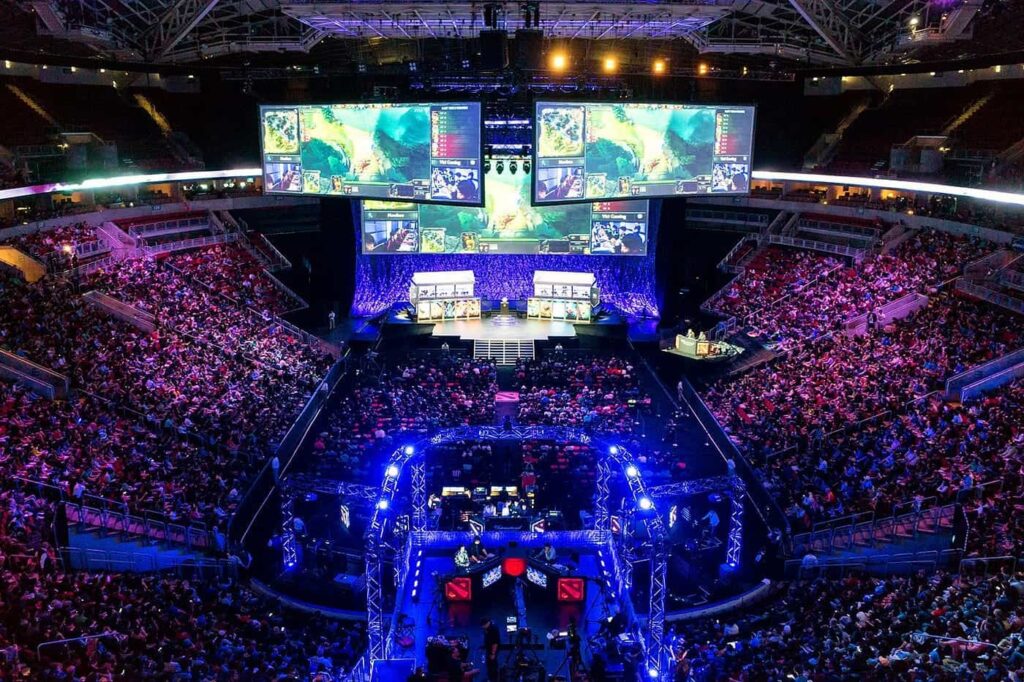
Esports titles can be categorized by their competitive formats, ranging from solo 1v1 matchups to strategic team-based play. Some of the major esports genres are as follows:
- First-Person Shooter (FPS): This first-person perspective game involves gun fighting and weapon-based combat. Examples: Counter-Strike 2 and VALORANT.
- Multiplayer Online Battle Arena (MOBA): These games focus on complex team strategy to destroy an enemy base. Examples: Dota 2 and League of Legends.
- Battle Royale: A survival game in which the last player or team standing wins. Examples: Fortnite and Apex Legends.
- Real-Time Strategy (RTS): A classic genre popular in the 90s, centered on strategy for resource management and tactical planning. Example: Starcraft II and Age of Empires.
- Fighting Games: Fast-paced close-combat games where players control characters and engage in 1v1 or 2v2 tag-team fights. Examples: 2XKO and Tekken.
- Sports Simulation: These are digital versions of competitive traditional games. Examples: EA Sports FC (formerly FIFA) and NBA 2K.
Esports Players, Teams & Professional Pathways
According to YouGov (2021), 6% of American teen males aspire to become esports stars, reflecting the growing interest of today’s generation in esports as a viable career. However, anyone interested should know that the path to becoming a professional esports player is intense and highly competitive.
Most professional players start to excel on the in-game ranked ladder, reaching the top 0.1% of the player base. From there, the journey usually follows three career stages:
- Amateur: New competitors start with grassroots teams and compete in open brackets or amateur leagues.
- Semi-Pro: Top amateur players are recruited into “Academy” teams and compete in Tier 2 and Tier 3 leagues like VALORANT Challengers, where they get professional training and small stipends.
- Professional: Elite-level players are signed by major organizations like T1 and Team Liquid.
Esports athletes train as rigorously as traditional sports athletes, practicing daily for 8-10 hours in scrims. They work with the coaches and analysts and attend fitness routines to prevent burnout. They also receive a full support staff, including managers and sports psychologists, to improve their peak performance.
Beyond the main stage, the professional esports ecosystem is huge. If you aren’t competing as a player, you can pursue other jobs in esports that are equally lucrative, such as marketing, commentary, or an esports agent, which allows you to hone your specific skillset in the industry.
How Do Esports Players Get Paid?
Professional esports players earn money through multiple income streams, with team salaries accounting for the bulk of their earnings.
In League of Legends, newly established professional players earn around €115,000 on average, while veterans competing in elite leagues like the LEC can earn well over €250,000 annually.
Apart from that, players also receive a share of tournament prize pools, typically 80% of the total winnings, divided equally among players. The main reason why the richest esports players of all time are from Dota 2 is its massive prize pool in The International.
Other avenues include skin sales (e.g., LoL Worlds skins) and merchandising, where developers sell in-game cosmetics and branded goods to fans, and esports teams receive a revenue share. Players also earn money through sponsorship deals and endorsements as they represent brands commercially and promote their products.
Many top players make $25,000 to $60,000 through content creation on platforms like Twitch or YouTube, mainly from subscription fees, donations, and ad revenue. Even after retiring from the competition, players like TenZ and Shroud continue to attract large audiences on streaming platforms.

History of Esports – Origins & Growth
While esports is a relatively modern term, competitive gaming has a history that dates back decades.
The first recognized esports tournament was the Intergalactic Spacewar Olympics hosted by Stanford University in 1972. In the 1980s, arcade events like the Space Invaders Championship drew over 10,000 players, proving video games could drive large-scale competition.
Following the widespread adoption of the internet in the 1990s, competitive gaming entered a new phase. Online multiplayer games, such as StarCraft, Quake, and Counter-Strike, gained huge popularity, especially in South Korea, where PC bangs became hubs for organized competitive play.
The meteoric success of esports started in the 2010s, as streaming platforms like Twitch turned niche tournaments into global spectator events. Different leagues began forming, viewership and prize pools expanded, and major sponsors joined, transforming the entire industry.
For a deeper insight into how esports evolved across different generations, you can read about the full esports history in our dedicated article.

The Global Esports Landscape in 2025
Esports has grown from a hobby into a serious global sport, with industry revenue reaching $4.78 billion by the end of 2025 (Statista, 2024). It has evolved into a competitive ecosystem with an estimated 664 million viewers worldwide.
The United States remains the largest single market, generating roughly $1.24 billion in esports revenue, followed by China and Germany. While overall revenue is lower, Asia continues to play a central role in esports growth, driven by its massive player base and mobile-first audience.
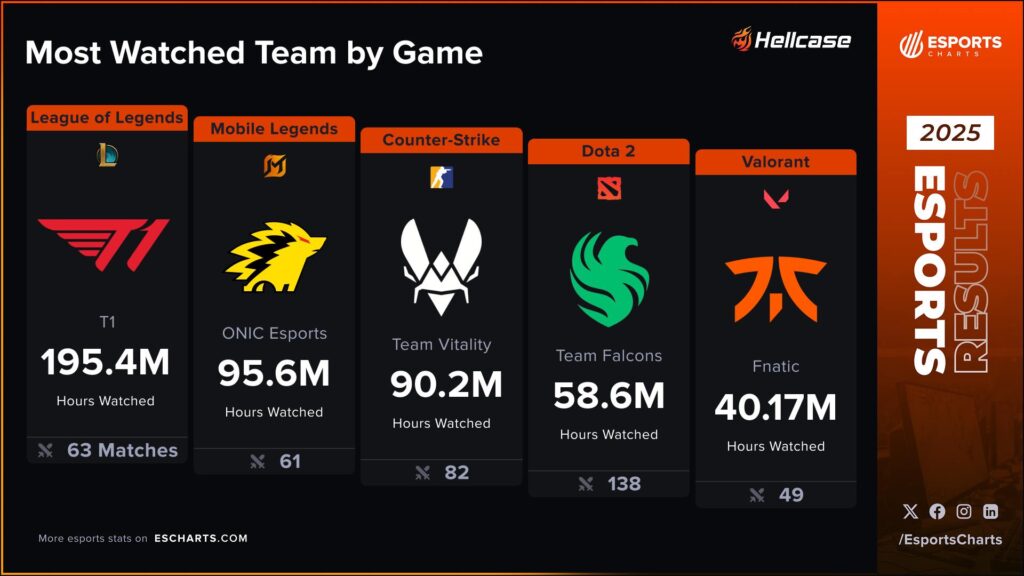
League of Legends remains the most popular esports game globally, recording 6.8 million peak viewers and 190 million hours watched at Worlds 2024. Other major titles include Counter-Strike 2, Dota 2, and VALORANT, while mobile esports like Mobile Legends: Bang Bang and PUBG Mobile dominate Asian audiences.
Esports has come a long way, with continued expansion expected in the years ahead. According to Statista (2025), the market is expected to grow at a rate of 5.35% annually, with revenue projected to reach $6.8 billion and the global user base nearing 925 million by 2030.
Compared to the massive $80 billion market of traditional sports, esports is still smaller, yet increasing investment in infrastructure, training labs, and mobile technology will help the industry mature steadily rather than slow down.
How To Get Started With Esports (For Beginners)
If you are a passionate gamer, you might be curious about how to become an esports player. With millions of casual gamers dreaming about that elite status, it is not an easy route.
In 2025, the esports industry values consistency, teamwork, and match experience just as much as rankings. Most notably, scouts look for players who understand team dynamics and can perform under pressure—not just someone with raw skills.
Here are some of the things you can do:
- Master the meta and rank up: Your main goal should be to reach the top tier of your game’s ranked ladder. For example, Radiant in VALORANT and Immortal in Dota 2. AI-led recruiters and scouts search the top percentiles of the leaderboards for new talent.
- Explore esports in college programs: Currently, in the U.S. and parts of Asia, collegiate esports has become a legitimate feeder system as professional organizations find top talent during these college events. Many universities also provide scholarships and professional-level training to players while they earn their degree.
- Join third-party portals: If you are exclusively queuing for ranked matchmaking, your chances of visibility are nearly zero. You must register and compete on tournament platforms like FACEIT, ESL Play, or Battlefy. These hubs host Open Qualifiers, which serve as the gateway to professional circuits.
- Sharpen your amateur portfolio: You should find team-based recruiters, such as Curry.gg or TeamTavern, to secure a stable roster for Tier 3 leagues and start competing in matches. Organizations prioritize players with experience in structured tournaments over individual mechanics alone.
FAQs
What is esports, and how does it work?
Esports refers to professional competitive gaming, whereby top teams compete across structured leagues and tournaments for prize money. A professional ecosystem of teams, sponsors, and broadcasters backs it.
What qualifies a game to be considered an esports?
For a casual game to be considered an esports game, it must (i) support fair competition, (ii) be multiplayer, (iii) have organized tournaments, and (iv) possess tools for broadcasting to spectators.
What is the difference between esports and gaming?
The crucial difference between esports and gaming lies in the players’ primary motive. Gaming is primarily for recreational purposes, whereas esports is an organized competition with clear rules and professional athletes.
How do esports players start their careers?
Esports players often begin their career at the amateur level, such as Open Qualifier events, online leagues, or college-based programs, before progressing to semi-pro and eventually professional teams.
What is an example of an esports?
League of Legends is a MOBA game and a clear example of an esports title, with regional leagues, professional teams, and major international tournaments.
References
- e-sport (Oxford University Press)
- What Is eSports and Why Do People Watch It? (SSRN)
- What is esports? A systematic scoping review and concept analysis of esports (National Library of Medicine)
- Doctor, vet, esports star, influencer: Dream jobs among US teens (YouGov)
- TenZ (Twitch)
- shroud (Twitch)
- The first Esports tournamentt (BBC)
- Esports – Worldwide (Statista)
- Global Esports Revenue Projections (2025) (Quantumrun Foresight)
- Sports – Worldwide (Statista)
- Challenge your game! (FACEIT)
- One chapter closes, a new one opens (ESL)
- Battlefy | Find and Organize Esports Tournaments (Battlefy)
- The ultimate esports platform to find and recruit your next teammates (Curry.gg)